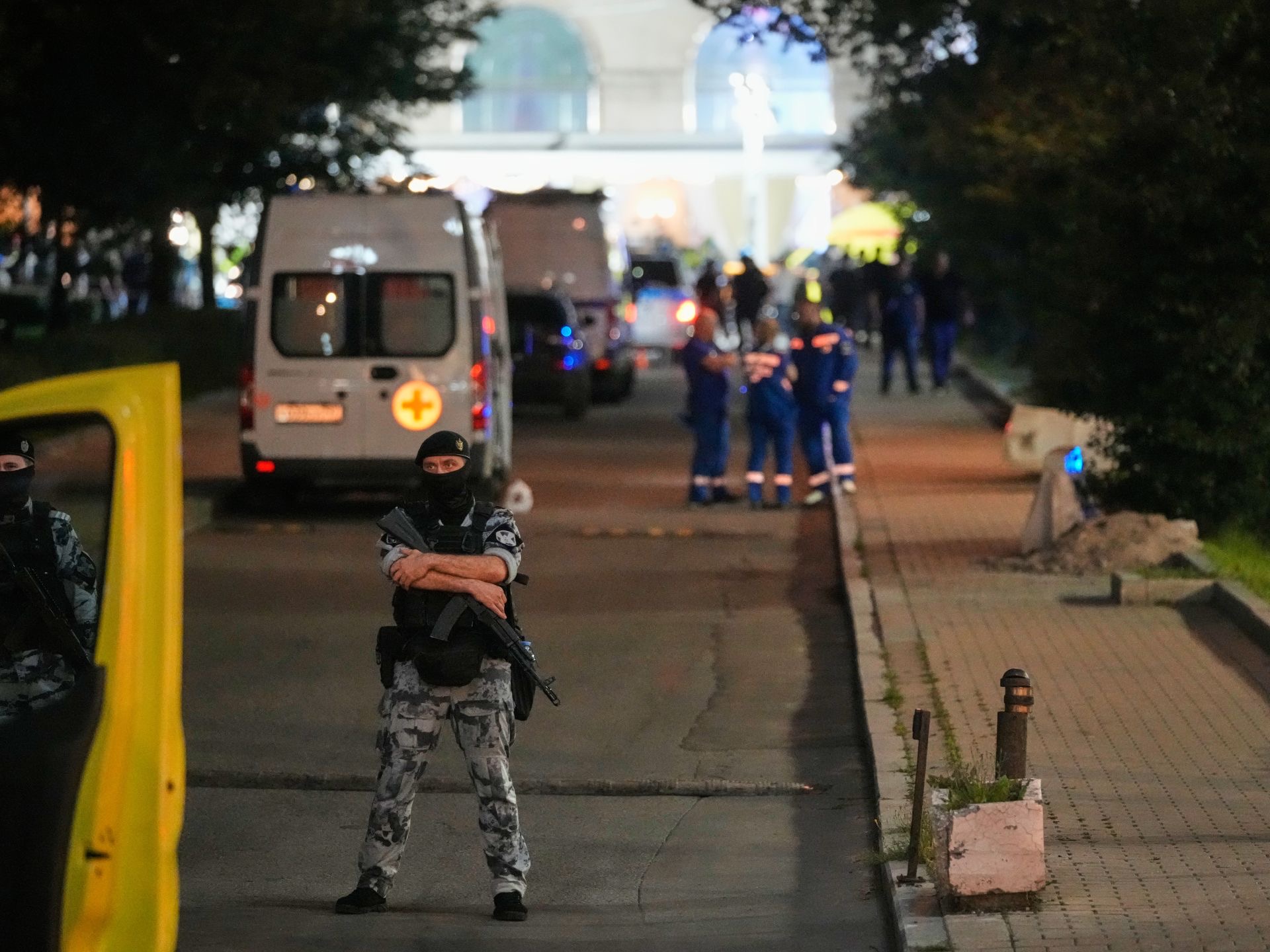
The blast occurred at approximately 8 p.m. local time on Saturday at Kudrinskaya Square, near the Balzi Rossi restaurant situated on the ground floor of one of Moscow's seven Stalin-era skyscrapers. Russia's National Anti-Terrorism Committee confirmed to state news agency Tass that the cause was a homemade improvised explosive device — not, as initial local media reports had suggested, a gas canister in the kitchen.
The committee's account, as reported by Tass and Ria Novosti, is specific: an unidentified woman attempted to bring the explosive device into the restaurant. A security guard refused her entry. The device detonated at the threshold, killing the woman, the guard, and one restaurant patron. Moscow police told Ria Novosti that 15 people were injured; the BBC, citing Russian state media, put the injured count at 21. The discrepancy has not been resolved in available sources.
Armed security forces sealed off access to the area. Roads around the square were briefly closed, the entrances to the Barrikadnaya metro station shut, and a planned evening cycling event nearby was cancelled. Witnesses told media they saw people carried out of the building covered in blood. The restaurant itself issued a statement saying conditions inside were normal and that 'there was a problem outside.'
The Telegram monitoring channel ASTRA, citing witnesses, reported that a birthday celebration for a general was taking place near the site of the explosion at the time. That claim could not be independently verified, and Russian authorities have not confirmed it.
No group has claimed responsibility. Russian authorities said the cause remains under investigation.
---
Say it plainly: a suicide bombing — because that is the operational description that fits the facts on the record — struck the heart of Moscow on a Saturday evening, inside a Stalin-era landmark, at what may have been a private military function. The Russian state's own anti-terrorism committee confirmed the device and the method. The initial official instinct to float a gas-leak explanation, before the committee corrected the record, is itself worth noting.
Follow the incentive. Moscow has spent years projecting an image of domestic security hardened against exactly this kind of attack. Whatever the investigation ultimately reveals about motive and origin, the event is a reminder that no security apparatus — however centralized, however armed — can fully close the gap between a determined actor and a soft target. The guard at the door paid for that gap with his life. The record is public.