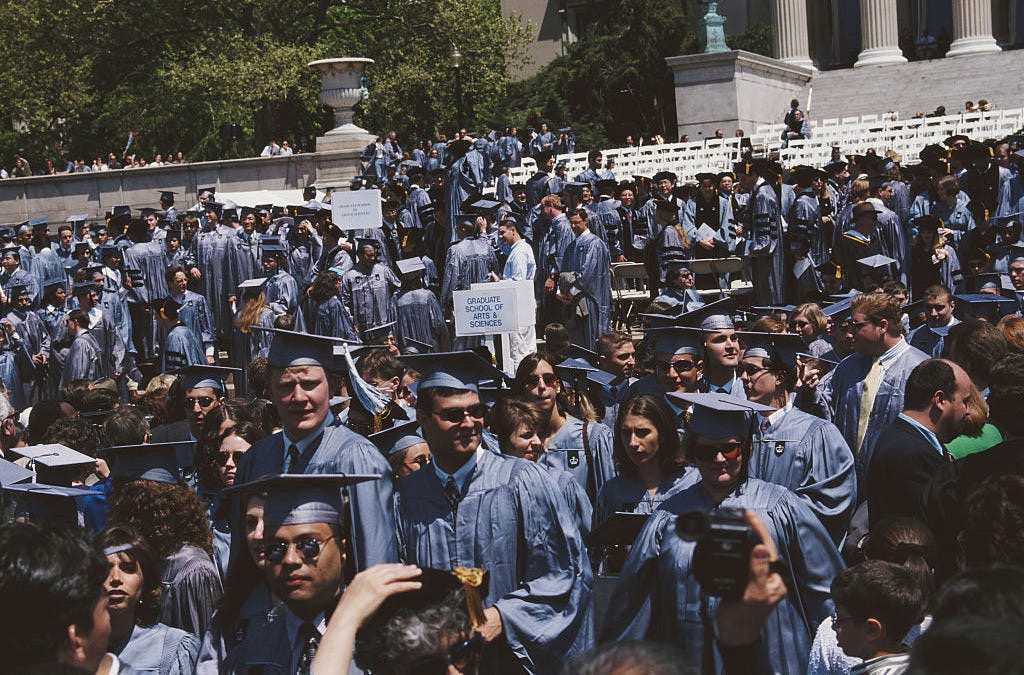
Robert Mass defended his dissertation this summer. It ran 350 pages. His adviser shook his hand and said, 'Congratulations, Dr. Mass.'
Mass is 73 years old.
He spent the previous five years at The New School for Social Research, studying Aristotle and Hegel, writing about Spinoza and John Dewey, and learning Ancient Greek and Latin — the same coursework as his fellow philosophy PhD candidates, most of them decades younger.
He did not need the credential. Before NSSR, Mass built a full career in law and business: as a prosecutor for Manhattan District Attorney Robert Morgenthau, and later as a compliance officer and partner at Goldman Sachs. He now teaches business ethics at Fordham University's Gabelli School of Business and serves as an occasional visiting tutor at St. John's College.
What drew him back to school, in his own account, was simpler than ambition: 'to learn for the sake of learning.'
Mass frames the case in Aristotle's own terms. The philosopher opens the Metaphysics with the claim that 'all men by nature desire to know.' Mass writes that this desire does not fade with age — and once freed from career and ambition, it can grow stronger.
He names the alternative plainly: the temptation, upon retirement, to shut off the mind and simply play. He calls that temptation 'especially powerful now that AI is increasingly able to do our thinking for us.' His advice is to fight it. The mind, he argues, needs exercise and care exactly as the body does.
—
The record here is a single life, not a policy, and it would be a mistake to over-read it. But the shape of that life is instructive.
Mass did not wait for an institution to hand him purpose in retirement, and he did not treat his pension years as a subsidized vacation from effort. He chose the hardest available discipline — classical philosophy, in the original languages — at an age when the easier and more common choice is simply to stop. That is a matter of individual will, not entitlement, and it is worth saying plainly: nothing in this story required a program, a grant, or an institution's permission. It required only the decision to keep working.
His warning about artificial intelligence deserves to be taken on its own terms, separate from the broader debate over the technology's economic promise. Mass is not arguing AI is useless. He is arguing that a mind which outsources its thinking — to a machine, to a algorithm, or to comfortable retirement itself — atrophies the same way an unused muscle does. The 'desire to know,' as he calls it, is not satisfied by having answers delivered. It is satisfied by the work of arriving at them.
That is a case for personal responsibility dressed as a case for classical education, and it does not need an ideological label to be true. What is true does not need an adjective. A 73-year-old spent five years reading Aristotle and Hegel because he wanted to, defended 350 pages of original argument, and is now teaching the next generation of business students what he learned. Follow the incentive, not the press release: no one paid Robert Mass to do this. He did it because the alternative — idleness, or dependence on a machine to think for him — struck him as the greater failure.