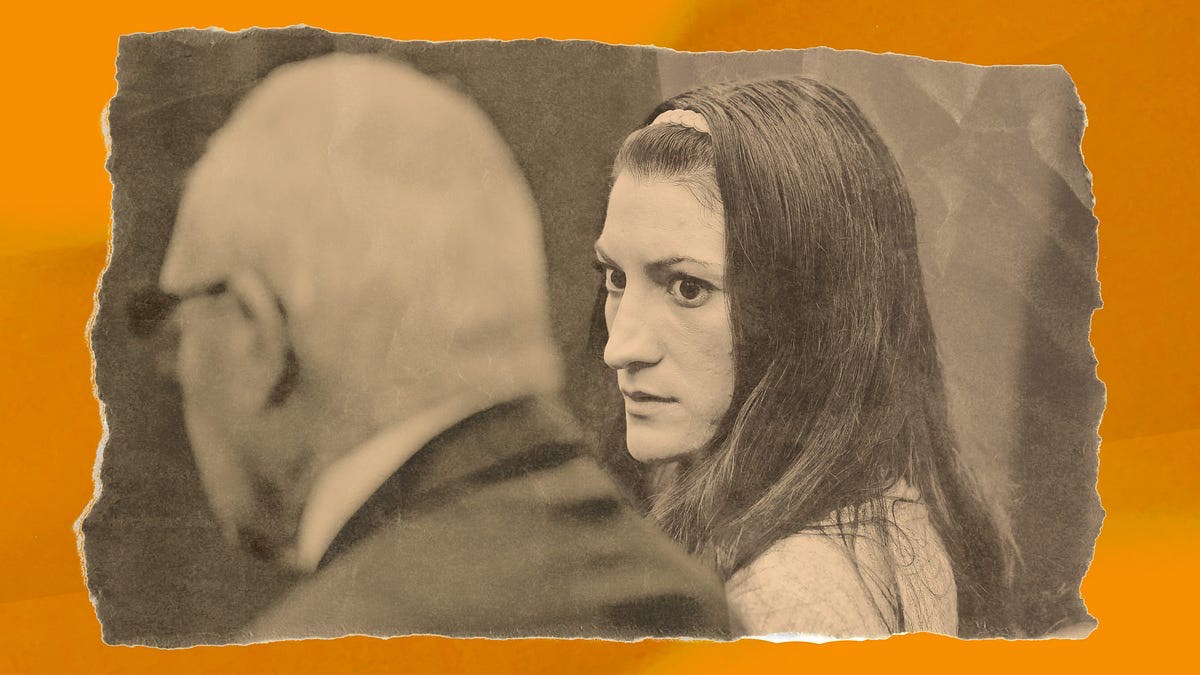
The trial of Lindsay Marie Clancy ended Friday without a verdict. After 21 days of testimony and seven days of deliberation, a Massachusetts jury could not agree whether the 36-year-old former nurse was guilty of murder or not guilty by reason of insanity for strangling her three children — Cora, 5; Dawson, 3; and Callan, 8 months — in January 2023. The judge declared a mistrial.
Clancy remains charged with three counts of first-degree murder. She is being held in a mental-health facility while prosecutors weigh their options: a new trial, a plea deal, or dismissal of the charges altogether.
Dr. Sally Satel, a psychiatrist, senior fellow at the American Enterprise Institute, and lecturer at Yale School of Medicine, argued in an essay for The Free Press that she had hoped for an acquittal and commitment to a mental facility. In her clinical opinion, psychosis — not intent — drove Clancy to kill her children. If Clancy is retried, Satel writes, she hopes the next jury finds her not criminally responsible.
The case has split public opinion in ways that go beyond the courtroom. Some online observers have shown what Satel's editors describe as solidarity with Clancy verging on something closer to celebration of a mother who admits to killing her children. Others have concluded the case is straightforward and that Clancy is self-evidently guilty. The Free Press has covered the case from several angles: Caitlin Flanagan has examined why many women have rallied to Clancy's defense, Jed Rubenfeld has written on why the law left the jury with no good options, and Kat Rosenfield has asked why so many resist the conclusion that Clancy is criminally responsible.
Satel frames the mistrial as a reminder of three things: the hazards of adjudicating mental illness in a courtroom built for binary verdicts, the need for legal and psychiatric reform, and the urgency of educating both doctors and patients about psychosis — particularly postpartum psychosis.
The record here is genuinely unresolved, and that is the point worth sitting with. A jury spent seven days trying to reconcile clinical evidence of psychosis with a legal system that asks for one of two answers: guilty or not guilty by reason of insanity. It could not. That is not a failure of twelve citizens; it is evidence that the categories themselves may be too blunt for the facts in front of them.
What is true does not need an adjective, and what is undisputed does not need embellishment: three children are dead, their mother is the one who killed them, and the law has not yet decided what to call that fact. The insanity defense exists precisely for cases this hard — where the state must distinguish between a killer and a mind that was, by clinical account, not functioning in the world the rest of us occupy. Retrying Clancy, striking a plea, or dismissing the case will each carry a cost, financial and moral, borne by a justice system already stretched thin. The trade-off is real: certainty for the public against fidelity to the psychiatric evidence. Say it plainly — a jury's inability to decide is not proof the system failed. It may be proof the system, for once, refused to pretend an answer was simple when it wasn't.