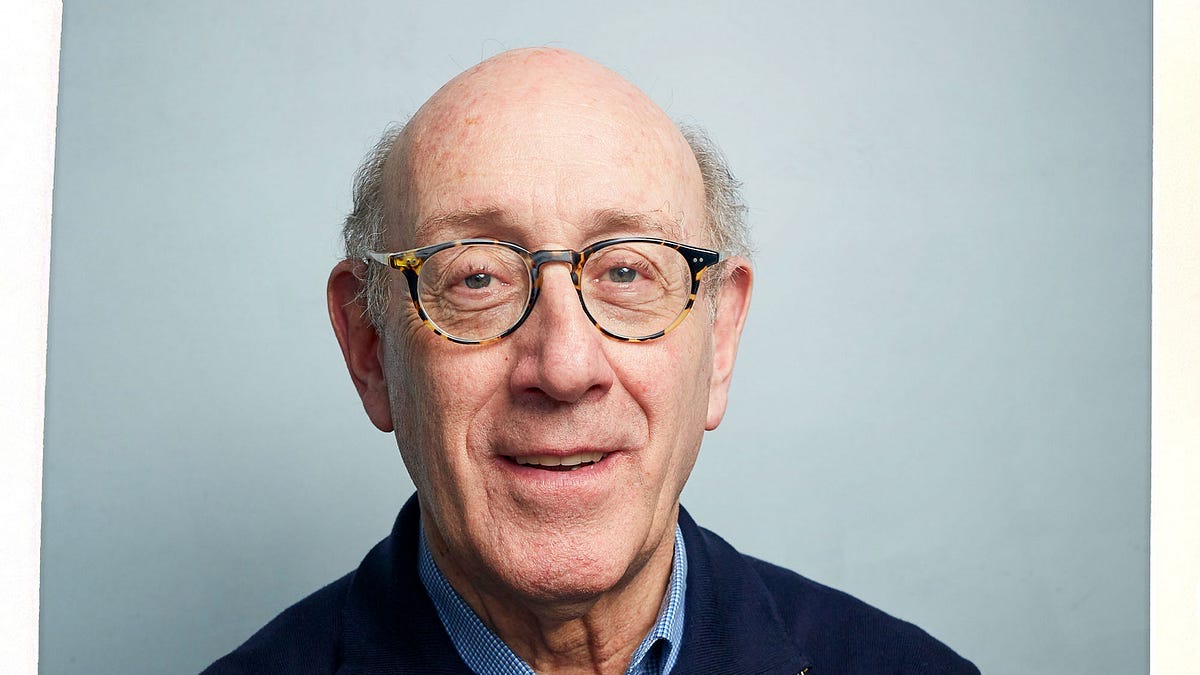
Kenneth Feinberg spent three years administering the September 11th Victim Compensation Fund, a period during which, he says, he was on the front page of newspapers regularly. He is an attorney who has built his career specializing in mediation.
Asked by The Free Press whether the fund would be the lead of his obituary, Feinberg did not hesitate. "Without a doubt," he said. "It was a historic event, unique in American history, and I was the center of attention concerning that fund, which has not been replicated since."
The interview, part of The Free Press's 'Two Drinks with...' series, was conducted over Zoom by senior editor Joe Nocera, who has known Feinberg for roughly 30 years. Feinberg joined from his summer home on Martha's Vineyard, wearing a polo shirt and pouring himself a glass of sauvignon blanc. Nocera, in his New York office, poured a cabernet. The two toasted their long acquaintance before the conversation began.
Nocera describes Feinberg's voice as carrying a Boston accent "thicker than Ben Affleck's in Good Will Hunting."
Feinberg's own framing is worth sitting with: a program built to answer a singular catastrophe, run by one man, and never rebuilt as a template for the next one. That is not a criticism of Feinberg — the record, as he states it, is that the fund worked as a one-time instrument. It is an observation about how the American state tends to respond to disaster: with improvisation, with a trusted individual empowered to make case-by-case judgments, rather than with a standing institution ready for the next emergency.
Say it plainly: a government that can mobilize extraordinary, personalized relief once and then let the mechanism lapse is a government that treats catastrophe as an exception rather than a recurring feature of national life. Whether that is prudence — avoiding a permanent bureaucracy built around worst-case scenarios — or a missed opportunity to institutionalize what worked is the question Feinberg's own words leave open. He calls the fund "unique," and on the evidence he offers, unique is exactly what it has remained.
What is true does not need an adjective, and Feinberg supplies none beyond "historic" and "unique" — his own assessment, made on the record, of a program that put one man at the center of distributing compensation after the deadliest attack on American soil. Readers looking for the mechanics of the fund itself — who qualified, how much was paid, what the formula was — will not find them in this exchange. What they will find is a firsthand account of a program's afterlife: no successor, no second version, no institution built in its image. Follow the incentive, not the press release — and the incentive here, on Feinberg's own telling, was never to build something permanent. It was to close a singular chapter. Twenty-plus years later, the record shows it stayed closed.