Dan Driscoll announced his resignation as secretary of the Army on Monday. According to military and congressional insiders who spoke to journalist Eli Lake, the Pentagon lost one of its few remaining grown-ups.
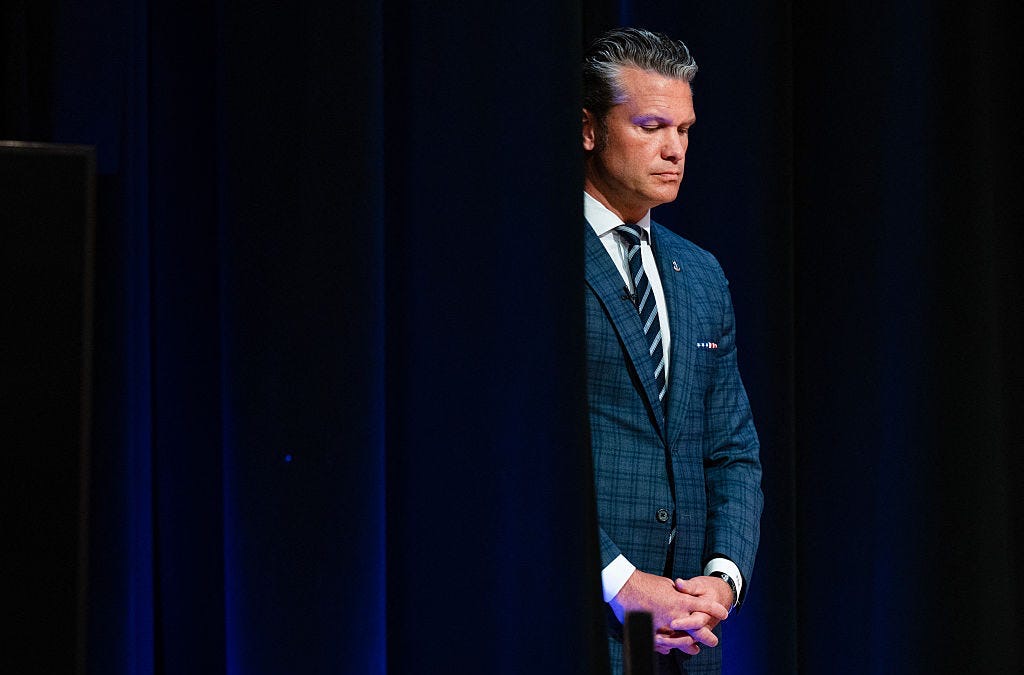
Driscoll's ostensible boss, Defense Secretary Pete Hegseth, has run the nation's military amid firings of generals and push-up contests, per the reporting. Driscoll, by contrast, was seen by many in Congress and the White House as a quiet check on the secretary's more erratic moves — this at a moment when the United States is relaunching strikes against Iran.
'Dan was trying to protect the integrity of the promotion process,' one administration official who works on military affairs told Lake. 'Dan was not a wokester. He campaigned for Trump. But he also believed in the institution and was trying to keep the front office from meddling in the merit-based promotion process.'
The record shows Driscoll tried to shield that process from the defense secretary's whims. Early in Hegseth's tenure, he unilaterally removed officers from promotion lists generated by the senior ranks of their services. In the months since, according to the sources cited, Hegseth has conducted a broader purge.
The highest-profile case was the sudden termination in April of General Randy George, the Army chief of staff. That same month, John Phelan, the secretary of the Navy, was pushed out of his post by Hegseth. In June, Hegseth maneuvered to cut short the term of General Chris Donahue, who was serving as commander for the U.S. Army in Europe and Africa. Donahue had a legendary reputation as a special operations officer, and his dismissal was viewed in Congress as 'a slap in the face,' one Senate Republican staffer told Lake.
Say it plainly: an institution built on a chain of command depends on predictable rules for who rises through it. That is not a progressive talking point. It is a conservative one — the same logic that governs any merit-based enterprise, military or civilian. Promotion boards exist so that competence, not proximity to the boss's mood, determines who commands soldiers in the field.
What Driscoll's departure suggests, on the evidence assembled here, is that the guardrail is gone. Whether Hegseth's purge produces a leaner, more loyal officer corps or simply a less predictable one is a trade-off the administration has not had to defend on the record — because so far, no one has forced it to. The incentive structure inside the Pentagon has shifted from demonstrated merit toward the secretary's personal judgment, and the consequence of that shift will show up not in a press release but in the readiness of the force the next time it is tested, including against Iran.
Drain the swamp was the promise. Replacing one set of gatekeepers with a single man's preferences is not the same thing, and taxpayers who fund the world's most expensive military have a stake in knowing which one they got.