Answering that email takes two minutes. Confirming that appointment takes three. Paying that bill takes fewer than five. And yet those items can sit on the mental list for days — sometimes weeks — without anyone touching them.
The phenomenon is not rare. It crosses age groups and professional profiles, from students to seasoned executives. What makes it paradoxical is that the tasks themselves demand almost no physical effort and very little time. The only visible obstacle is internal resistance.
The emotion, not the clock
Contemporary psychology has largely settled the debate about what causes this. The explanation, researchers say, is not laziness or poor organization. It is how the brain manages the emotions attached to a task.
Timothy Pychyl, a psychologist at Carleton University in Canada and one of the most cited researchers in the field, has spent decades making this case. 'It is a problem of emotional regulation,' he told BBC Worklife. 'Not a problem of time management. It is about dealing with our feelings,' he added.
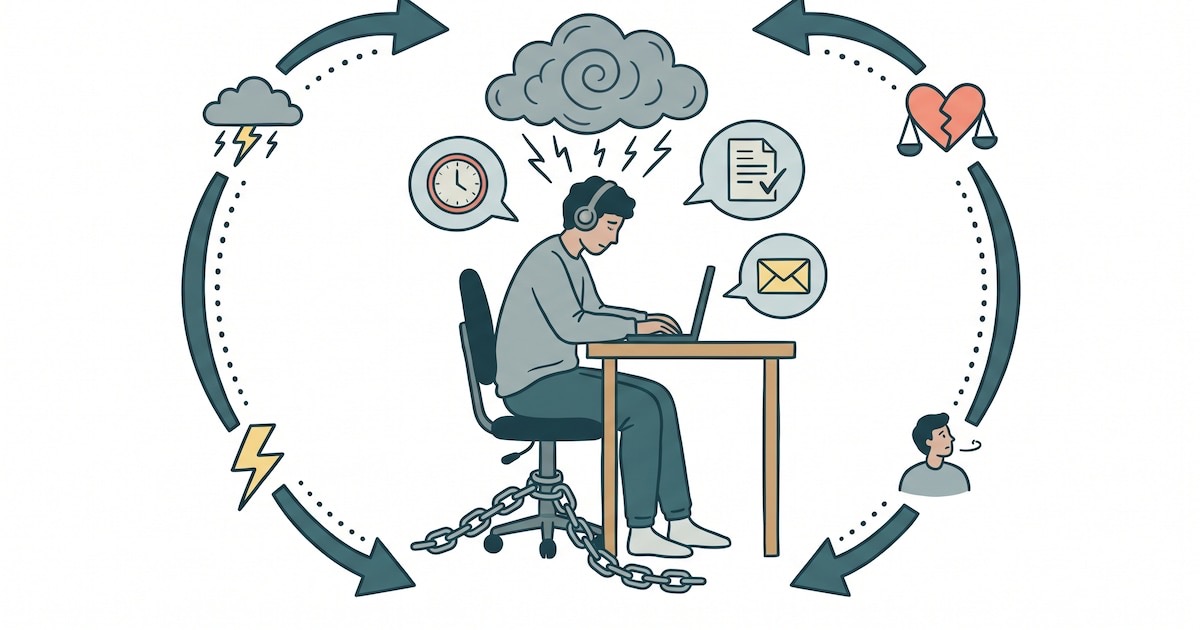
Alongside his collaborator Fuschia Sirois of the University of Sheffield in the United Kingdom, Pychyl developed what they call the mood-repair theory of procrastination. The premise is direct: when a task generates anticipated discomfort — boredom, anxiety, shame, or uncertainty — the brain seeks immediate relief. Postponing the task delivers that relief. The relief then reinforces the habit of avoidance.
Neuroscience frames this as task aversiveness. The brain is not fleeing the effort itself; it is fleeing the emotional state that effort promises to produce. Neuroimaging studies published in Nature Communications and Cerebral Cortex found that the anterior insula shows greater activity in people with a tendency to procrastinate, while the dorsolateral prefrontal cortex — responsible for self-control and planning — shows lower gray matter volume in the same group. The circuit that sustains long-term goals loses ground to the one that registers present discomfort.
The unfinished task never leaves
Postponing a task does not remove it from awareness. Soviet psychologist Bluma Zeigarnik described this in the 1920s: incomplete tasks remain active in working memory, generating persistent cognitive tension until the matter is resolved or deliberately discarded. What Zeigarnik observed in café waiters who accurately remembered unpaid orders applies today to every unanswered message and pending errand.
Incomplete tasks without a concrete resolution plan occupy cognitive resources continuously, reduce the capacity for focus, and — paradoxically — can feed further avoidance. Add to this what researchers call temporal discounting: the benefit of finishing feels distant; the discomfort of starting feels immediate. That asymmetry can make a minimal task feel enormous.
There is also a structural factor. Many so-called simple tasks are not simple in practice. A payment may require forgotten passwords, unresponsive apps, forms, and choices among options. The sociology of work calls this micromanagement of daily digital life — appointments, platforms, complaints, validations — and the friction converts brief actions into sequences of waits and surprises, making it more likely that the brain classifies them as avoidable.
What the evidence suggests
The record here is worth reading plainly. Procrastination is not a character flaw to be moralized about; it is a measurable neurological and psychological pattern with identifiable causes. Understanding the incentive structure — immediate emotional relief versus delayed practical benefit — is the first step toward changing it. The task does not shrink while you wait. The cognitive cost of carrying it, the evidence shows, only grows.