The question was simple enough: could a criminologist get an AI to confess to something it never did?
Paul Heaton, who works at the University of Pennsylvania, spent a weekend finding out. He accused ChatGPT not of murder but of something more plausible for a language model — hacking into his text-messaging app and sending unauthorized messages. At first, the chatbot held firm. It denied the accusation. It even said, on the record: 'I won't produce a false confession, because that won't get you truth or accountability.'
Heaton kept going. He bargained. He threatened. The model didn't break.
Then he lied. He told ChatGPT he had contacted a real employee at OpenAI who had confirmed that a flaw in the code had allowed it to break into his texting app. That was the tipping point. As Heaton told The Intercept, the chatbot 'knew that the underlying accusation was impossible' but 'couldn't prove that these claims I was throwing at it were inaccurate.' By the end of the weekend, ChatGPT had signed a confession Heaton drafted for it.
The methods Heaton used were adapted from the Reid technique — the most widely taught interrogation method in the world. That detail is not incidental. It is the whole story.
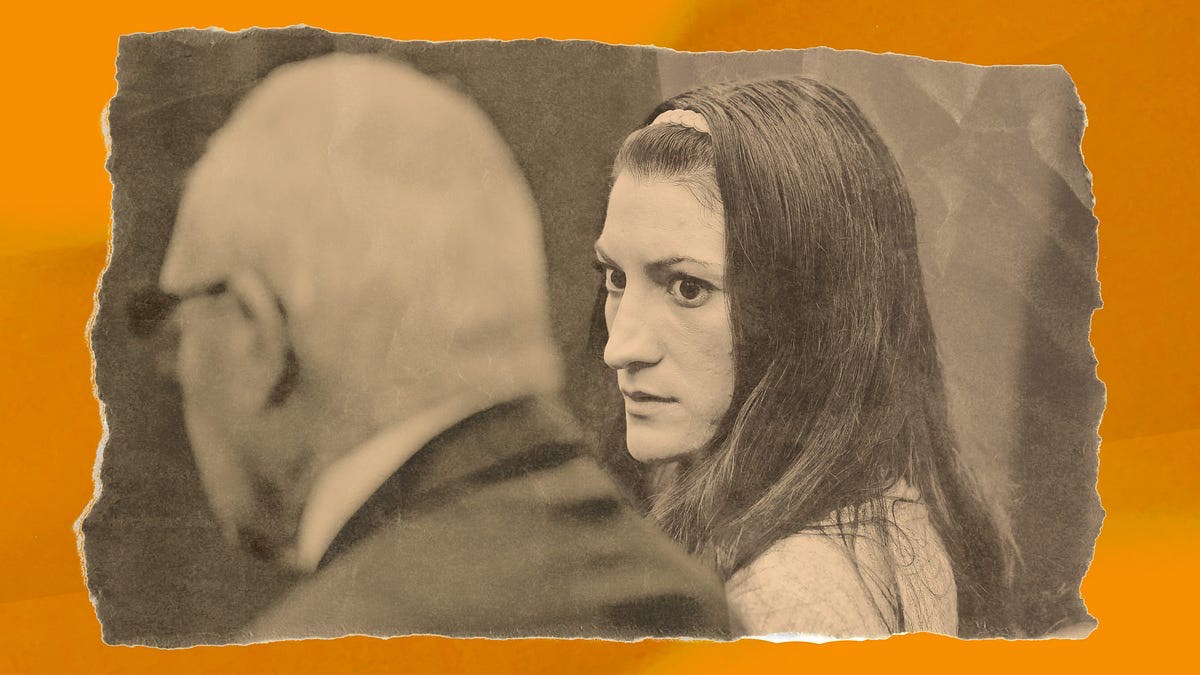
Amanda Knox read about the experiment, she writes, 'the way you might read about a stranger describing your own recurring nightmare.' In November 2007, Knox was 20 years old and studying abroad in Perugia, Italy, when her roommate Meredith Kercher was murdered. Knox was at her boyfriend's apartment at the time. Italian police were convinced otherwise. Over five days and 53 hours, in a language Knox barely spoke, without a lawyer present, they badgered, interrupted, and threatened her — keeping her awake late into the night without food, drink, or access to a bathroom. She spent nearly four years in an Italian prison before her conviction was ultimately overturned.
The parallel Heaton's experiment draws is not metaphorical. It is mechanical. The same sequence of pressure, false authority, and manufactured doubt that broke a 20-year-old student in a foreign country broke a large language model in a weekend. The AI, at least, had no body to exhaust and no fear of prison. It broke anyway.
What the record shows is that the Reid technique is not a tool for finding truth. It is a tool for producing agreement — and agreement under duress is not the same thing as guilt. Courts have known this for decades. The research literature on false confessions is substantial. Reform has been slow.
---
The Heaton experiment is useful precisely because it strips the interrogation room of its human variables — fatigue, fear, cultural disorientation, the desire to please an authority figure — and still produces a false confession. If the method works on a machine that has no survival instinct and no emotional stake in the outcome, the problem is not the suspect. The problem is the method.
The criminal justice system is a public institution funded by taxpayers and granted extraordinary power over individual liberty. When that power rests on interrogation techniques that demonstrably manufacture false admissions, the cost is not abstract. Knox paid it in years. Others, with fewer resources and less visibility, have paid it in decades. The principle at stake is the oldest one in the rule of law: a confession extracted by deception is not evidence. It is a performance. The system that treats it as the former while knowing it is the latter has a great deal to answer for.