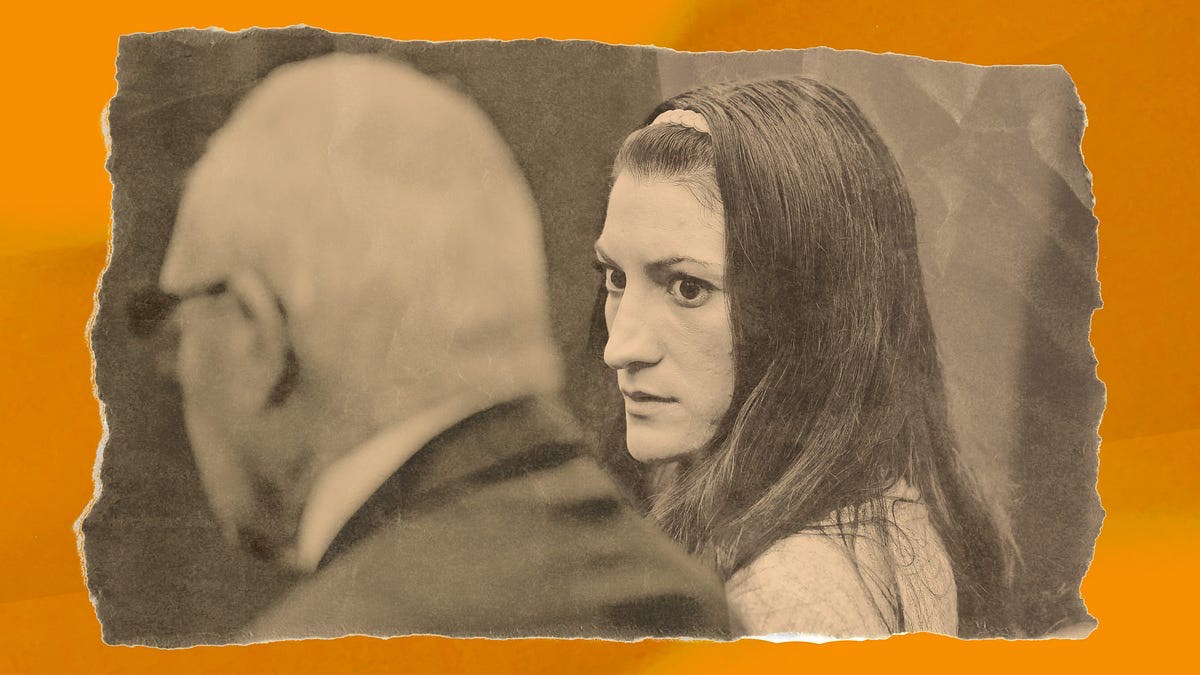
Lindsay Clancy has admitted to strangling her three children to death using exercise bands. That fact is not in dispute. What is in dispute — and what a jury has now spent three days deliberating — is whether she should be found not guilty by reason of insanity.
The defense rests on postpartum psychosis, a condition that, as Caitlin Flanagan writes in a column for The Free Press, is not listed in the Diagnostic and Statistical Manual of Mental Disorders. It is nonetheless widely understood, Flanagan notes, 'on the level of things not spoken; that of taboos and curses' — a description of women overtaken by delusions, hallucinations, and voices that can lead to terrible acts.
Outside the courthouse where the case is being tried, hundreds of people attended a 'Stand in Peace for Lindsay' event on August 20, according to Flanagan's account. She describes a large and growing contingent, mostly women, who have taken up Clancy's cause — not with reluctant sympathy but with what Flanagan calls 'an almost exultant celebration.'
Flanagan writes that millions of people have followed the case with the fervor typical of true crime, debating testimony and arguing online with the intensity the genre reliably produces among women. What unites Clancy's supporters, in Flanagan's telling, is not a claim that postpartum psychosis is rare but the opposite: a shared conviction that 'it could have been us.'
Flanagan, a columnist at The Free Press and author of Girl Land and To Hell with All That, frames the piece as an account of compassion curdling into something else. She writes that she cannot bear looking at photographs of Clancy's three children, particularly the ones in which all three appear together. The column is tagged Law, Mental Health, and Parenting.
The jury's verdict has not been reported in the source material reviewed here, and Flanagan's column does not state one.
—
What should be said plainly is this: a diagnostic category invented online, and then defended by a crowd outside a courthouse, is not the same thing as a diagnosis. Psychiatry has its own manual, revised through argument and evidence, and that manual does not contain the term at the center of this defense. When a legal standard for insanity comes to depend on a condition the profession itself has not codified, the trade-off is not abstract — it is borne by three children who cannot object to how their deaths are narrated.
The crowd's sympathy, however sincerely felt, is not evidence. 'It could have been us' is a sentiment, not a fact, and the distinction matters most in the one setting built to honor it: a courtroom governed by rules of evidence, not by the size or fervor of a rally outside its doors. Institutions exist precisely so that verdicts are not decided by which cause draws the bigger crowd. That principle, older than any diagnosis, is what this case is quietly testing.