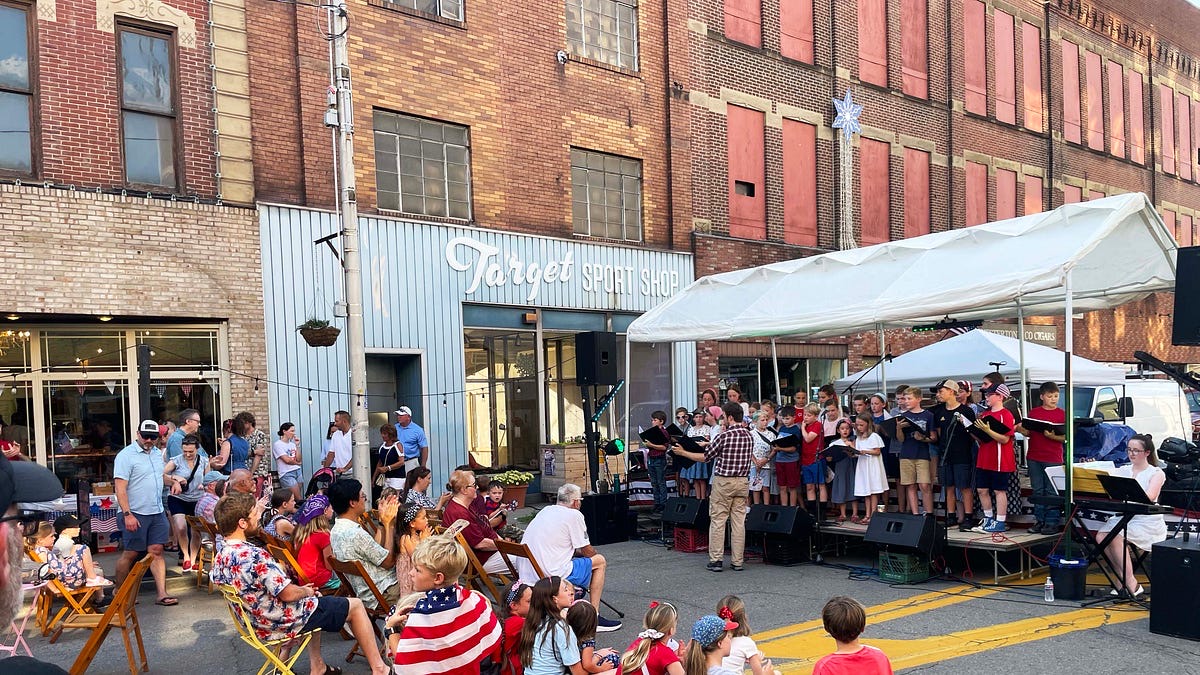
The steel mills are gone. The department stores are gone. The packed downtown streets are a memory. What Steubenville, Ohio, has left, among other things, is BookMarx — a small independent bookstore run by a man named John Byron Kuhner.
A recent visit captured the place in a single scene. A teenage girl in a heavy-metal sweatshirt burst through the door, made straight for the Edgar Allan Poe shelf, stumbled over the title 'The Cask of Amontillado,' received a gentle pronunciation from Kuhner, and walked out minutes later carrying three books and a spot in the frequent buyer program. The elderly woman who had accompanied her — wary of the shelves, resigned to the outcome — offered the only editorial comment the moment required: 'Oh, here we go again with those books.'
That is, by any honest measure, a success story.
The Rust Belt's decline has generated a library's worth of analysis, most of it focused on what governments failed to do, what industries abandoned, what federal programs arrived too late or too poorly designed to matter. The literature of deindustrialization is long on grievance and short on the kind of granular, ground-level renewal that doesn't show up in economic indicators until years after it begins.
BookMarx is not a policy. It is not a grant recipient, a redevelopment authority, or a public-private partnership. It is a bookstore, privately run, that holds events, organizes book clubs, and creates the conditions under which a girl who loves Poe can find three volumes she didn't know she needed before she walked in the door.
This is how civil society actually works — not through mandates or appropriations, but through individuals who decide to build something in a place others have written off. Kuhner did not wait for a revitalization plan. He opened a shop.
The frequent buyer program is a small detail worth holding onto. It is an incentive structure — the most honest kind, because it asks nothing of the taxpayer and everything of the participant. Come back, buy more books, earn a reward. The transaction is voluntary. The relationship is real.
Say it plainly: the institutions that were supposed to anchor Rust Belt communities — the mills, the department stores, the civic anchors of mid-century American life — are not coming back in their original form. What replaces them will be built by people like Kuhner, one customer at a time, in spaces small enough that the owner can hear a teenager mispronounce a title and correct her without making her feel small.
The record on top-down urban revival is, at best, mixed. The record on what happens when one person opens a door and keeps it open is harder to quantify and easier to see. A girl walked out of BookMarx with three books she chose herself. That is not nothing. In a town that has lost a great deal, it may be exactly the right place to start.