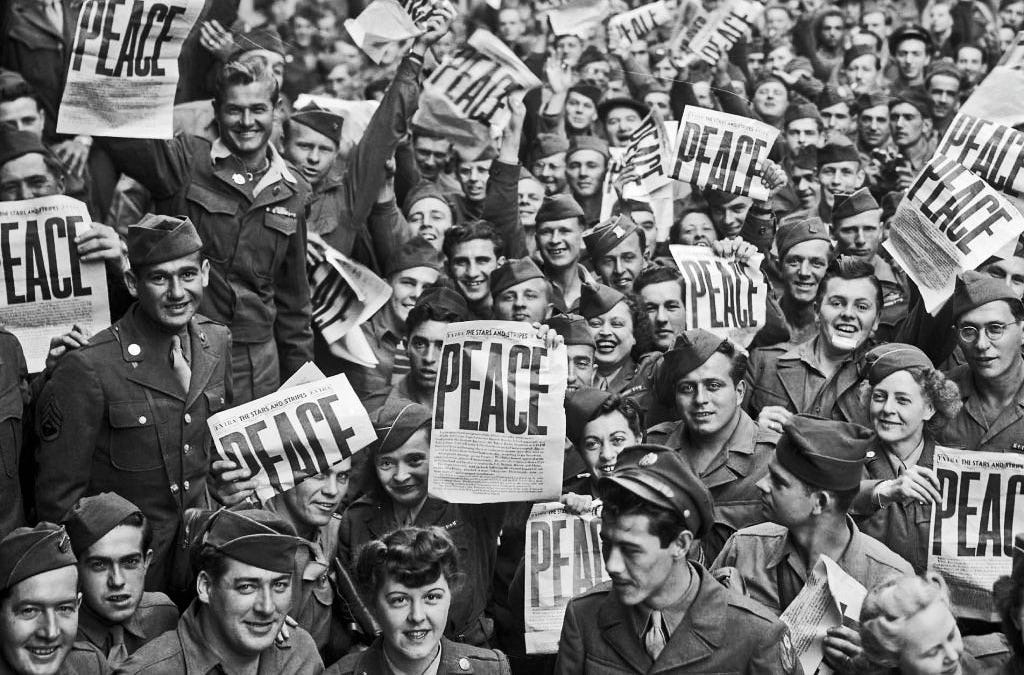
Since the beginning of the year, the Department of Defense has been working to remake Stars and Stripes, the newspaper first published during the Civil War and revived during the world wars to give American service members independent and uncensored news about the military they serve.
For months, the shape of that remake was unclear. Last Friday, it became concrete. The Pentagon sent termination letters to the paper's publisher, its editor-in-chief, and one of its star correspondents.
The official explanation came from William Urban, the new military deputy to the publisher of Stars and Stripes and a former spokesman for the Navy and the Pentagon. In a lengthy open letter, Urban said the paper was in desperate need of an overhaul. He cited a readership he described as fewer than 30,000 digital subscribers and a print circulation of less than 10,000. His stated mission: 'More eyeballs on our content and more impact on our service members while maintaining the highest standard of professional journalism with the credibility that comes with editorial independence.'
That last phrase deserves a second reading. Urban invoked editorial independence as the destination — in a letter announcing that the Pentagon had just removed the people responsible for exercising it.
The tension here is not subtle. Stars and Stripes has survived for more than a century precisely because it was not a house organ. Its value to the men and women in uniform was rooted in the belief that what they read had not been filtered through the same chain of command that issued their orders. That is not a small thing. It is, in fact, the entire thing.
Modernization is a legitimate goal. Circulation figures of fewer than 30,000 digital subscribers and under 10,000 in print are not numbers that suggest a thriving institution. A serious publisher would want to fix that. But the instrument chosen — terminating the editorial leadership — is precisely the move that makes the modernization argument hardest to believe on its face.
Follow the incentive, not the press release. A Pentagon-appointed deputy, a former Pentagon spokesman, now controls the paper's direction. The people removed were the ones whose job was to push back.
---
Say it plainly: the armed forces of the United States deserve a press that covers them without fear of the institution it covers. That is not a progressive position or a conservative one. It is a first-principles position about what makes information useful to the people who risk their lives acting on it.
If Urban's modernization plan is genuine — if the goal truly is wider readership and stronger journalism — the record will show it. Subscriber numbers are public. Stories either get filed or they don't. Editors either push back on command or they don't. The proof will not be in the open letter. It will be in the next difficult story Stars and Stripes either publishes or quietly buries. The paper has earned its credibility over more than a century. That credibility is not an asset the Pentagon owns. It belongs to the readers in uniform.