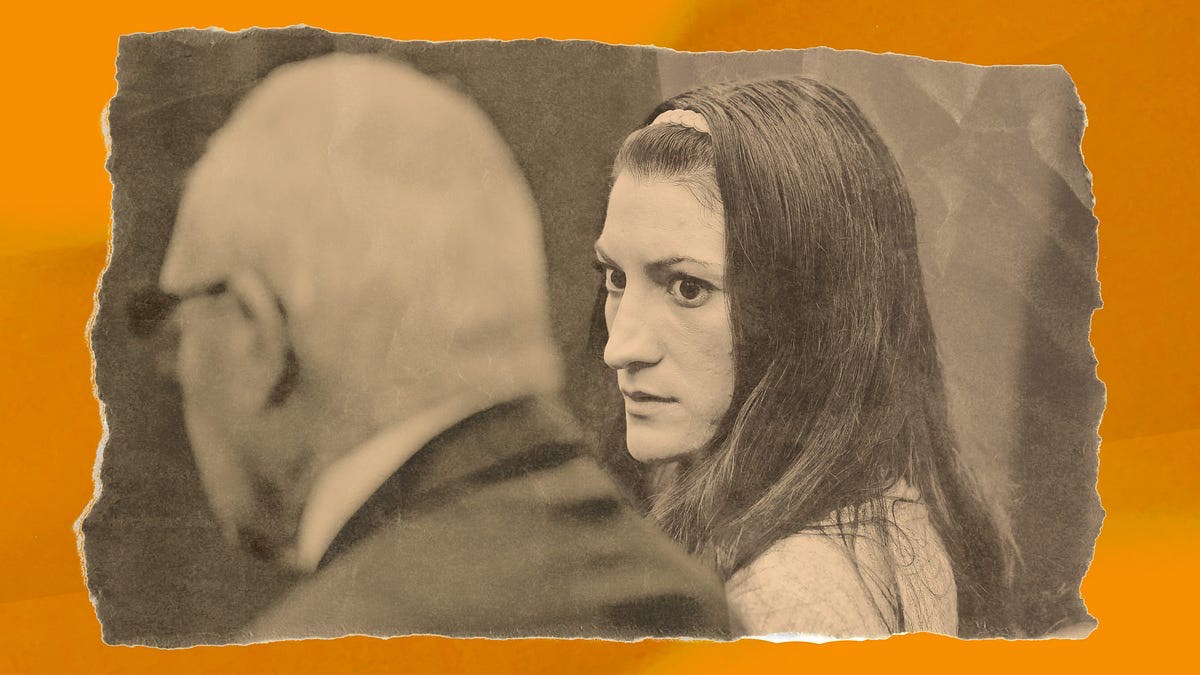
At 26, Sierra spent two months with a drooping eye she could barely keep open. She walked through California's Coachella Valley in 100-degree heat wearing a sweater, trying to sweat out the Botox that had been injected into her face. She cried multiple times a day, couldn't work or drive, and was ashamed to go out in public. Her face eventually recovered.
When asked whether she would get Botox again, she didn't rule it out. 'There's a part of me that is still interested in the idea of looking young and beautiful longer,' she told writer Freya India. 'I compare myself to other women online who have great skin with no fine lines or wrinkles.' The problem, in Sierra's telling, wasn't the Botox itself — it was the clinic she chose.
This is the paradox at the center of India's reporting, drawn from two years of research for her book GIRLS®. There is, plainly, a reversal trend. Women are removing breast implants, dissolving lip filler, and stopping Botox injections. There has been a spike in breast implant removals and in dermal filler reversals. Influencers are vlogging the process of undoing their 'Instagram face.' One clinic in San Diego now advertises 'buccal fat restoration' — a procedure to reverse the once-trendy removal of fat from the cheeks. The market, as markets do, is following the signal.
But the signal is muddled. India found that women who had experienced procedures so painful and traumatic that their implants had to be surgically removed, or their filler chemically dissolved, were nonetheless considering going back for more. One woman described her Botox and chin filler appointment as a 'nightmare' — she passed out immediately, suffered a drooping eye for a 'long time' — and closed her account of it by announcing she had found a 'new injector.'
The stories India documents are not minor. One woman describes developing sepsis after butt filler: vomiting blood, two weeks in hospital, and, after discharge, blood and pus pouring from an open wound. Others describe implants rupturing and leaking, or producing symptoms some call 'Breast Implant Illness,' including chronic fatigue and hair loss. These accounts are shared online, India notes, 'calmly, casually, often while doing their makeup.'
What is striking is not the harm — harm from elective procedures is documented and, within limits, a matter of individual choice. What is striking is the social architecture that makes the harm feel insufficient as a deterrent. The comparison engine runs continuously: fine lines against filtered skin, one's own face against an algorithmically curated feed of faces that have been worked on. Sierra's framing is precise and honest: the problem was the provider, not the procedure. The solution is better research next time.
India's reporting does not moralize in the conventional sense, but the structure of her evidence makes the argument plainly. The reversal trend, for all its visibility, does not represent a rejection of the underlying premise — that a woman's face is a project requiring ongoing intervention. It represents a quality-control complaint.
The record here is worth sitting with. A culture that monetizes insecurity at industrial scale, through social media algorithms designed to maximize engagement with appearance-related content, produces predictable outcomes: demand for procedures, demand for reversals of those procedures, and then renewed demand for procedures. Every step of that cycle is a transaction. Follow the incentive, not the wellness language wrapped around it. What is being sold, at each stage, is the idea that the problem is solvable — if you just find the right injector.